

The Gol Gumbaz monument in Bijapur is a majestic construction that signifies grandeur, history, and genius in design. This mausoleum was constructed in the 17th century and still amazes both visitors and history experts. It is a memorable place with its whispering gallery, its huge dome, and historic stories.
In this article, we will explore 10 interesting facts about Gol Gumbaz, in simplifing presentation terms deconstructing its structure design features and secrets. These facts will offer insights into what the Gol Gumbaz in Bijapur and worth visiting.
What is the Gol Gumbaz in Bijapur?
Gol Gumbaz is a large tomb built for Sultan Mohammed Adil Shah. Located in Bijapur, Karnataka, it was constructed in the 1600s. It is one of the most visited tourist places in South India today. The dome and the whispering gallery of the monument are adored.
The name Gol Gumbaz means “Round Dome”.It has a shape that is literally round, wide, and quite tall. This whole building is placed on a square base, and it is also notable due to its brilliant design.
Gol Gumbaz’s Historical Background and Purpose
Mohammed Adil Shah was Sultan who had ruled Bijapur Sultanate in the 17 th century. He wanted to build a grand tomb for himself, one that would last forever. Gol Gumbaz began this project before becoming king in 1627.
He didn’t want a small grave like others and He wanted something massive and unique. The construction took many years and was completed in 1656, just before his death. This is what turned Gol Gumbaz into his graveyard.
10 Interesting Facts About Gol Gumbaz
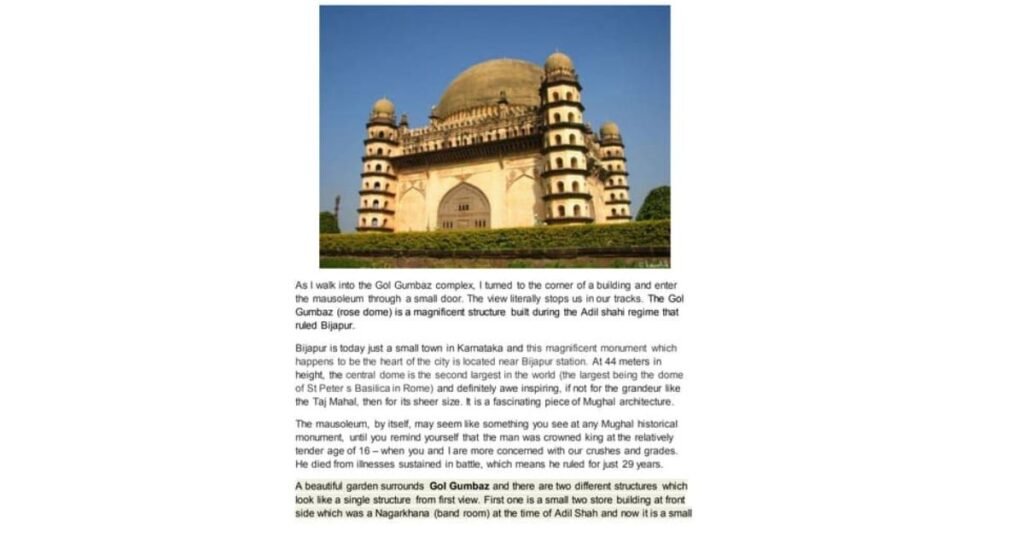
Let’s now break down the interesting facts that reveal the hidden beauty and historical wonders of this remarkable construction of the Gol Gumbaz.
1. One of the World’s Largest Domes
The dome of Gol Gumbaz is the second largest in the world. It has a diameter of 44 meters. Even more remarkable is the fact that it does not have any internal support. In the architecture of the period, this is exceptional. The dome is made of strong basalt stone and is evenly structured on a square base. It is extremely large and one can see it even from a few kilometers away, which complements its commanding appearance.
2. The Monument That Echoes Like Magic
Gol Gumbaz is famous for its whispering gallery. A person can whisper from one side, and someone on the other side will hear it clearly—up to 10 times. This happens because of the perfect acoustics inside the dome. Even soft sounds travel around the circular gallery. It’s one of the reasons this place stands out in the world of monuments.
3. Built by a Master from Dabul
The architect behind this structure was Yaqut of Dabul. He came from the port town of Dabhol in Maharashtra. He was known for his skills in both design and planning. His design of Gol Gumbaz used octagonal towers, arches, and balanced symmetry. He created something that remains a mystery for many modern engineers.
5. The Southern Version of the Taj Mahal
People often call Gol Gumbaz the “Black Taj Mahal.” It uses dark grey stone, unlike the white marble used in Agra. The design shares many common features like symmetry, domes, and platform height. Both were built in the same era. Gol Gumbaz was already under construction when work on the Taj began. It shows how powerful rulers of that time expressed their legacy through architecture.
6. A Resting Place for More Than One
The Gol Gumbaz is not just for the Sultan. Inside the chamber, you’ll find the remains of five people—Mohammed Adil Shah, his wife, daughter, grandson, and his mistress named Rambha.They are put in a raised platform, their cenotaphs. Their real graves lie under them. The central cenotaph is covered with a wooden baldachin.
7. Inside a Space That Feels Endless
The main chamber inside Gol Gumbaz is massive. It covers around 1,700 square meters. It’s one of the biggest single rooms without support columns. This is a large area that enhances sound and contributes to the echo. This is one of the main reasons why the whispering gallery is such a great idea. Visitors often find themselves clapping or speaking softly just to hear their echoes travel.
8. From Prince to Monument Builder
Interestingly, Mohammed Adil Shah began this construction before becoming king in 1627. He did not want to be buried in an unmarked grave and wanted to be grand. Thus, he started his planning and construction at an early age. This occupied him for many years and was continued until he died in 1656. The design was still impressive, although incomplete, even after so long.
9. A Rare Blend of Design Strength
One key reason the dome stands without pillars is because of a smart design trick. The builders created what’s called ” intersecting pendentives.” These support the weight of the dome by spreading it equally. The method gives the structure balance and keeps it standing strong even today.
10. The Lightning Stone of Belief
A unique object hangs near the main entrance of Gol Gumbaz—a meteorite tied with a steel chain. Locals call it “Sidili,” meaning thunderbolt. This stone is believed to have fallen during construction. The Sultan thought it was a lucky sign and decided to place it at the monument’s entrance as a symbol of divine protection.
Gol Gumbaz vs Other Historical Monuments
Here is a comparison of some of the main features used to indicate how Gol Gumbaz is different:
| Feature | Gol Gumbaz | Taj Mahal |
| Dome Diameter | 44 meters | 35 meters |
| Built In | 1627–1656 | 1632–1658 |
| Main Material | Basalt Stone | White Marble |
| Known For | Whispering Gallery | Artistic Marble Beauty |
| Resting People | 5 Individuals | 2 (Shah Jahan and Mumtaz) |
This table demonstrates that Gol Gumbaz stands on its own in terms of size and significance even to the Taj Mahal.
Why Travelers Still Visit Today?
Gol Gumbaz is not just a structure. It’s an experience. It is visited by people who want to listen to their whispers, see the skyline through the base of the dome, and experience history alive. Combined design, engineering, and stories make it one to visit. These 10 interesting facts about Gol Gumbaz will reveal tell you why this particular sight has so much significance in the realm of Indian architecture.